Posts

Showing posts with the label women with disabilities

Disability and Masturbation

Image
Image Description: Two femme-appearing people facing one another on a gravel pathway. The background is composed of slightly blurry trees. The person on the right is wearing all white and sitting in a wheelchair. The person on the left is wearing a blue jumper, blue jeans, white heels and a white hat with a blue rim. They are looking up at the person in the wheelchair and their hands are open, facing the sky. They look to be deep in conversation.  It was 2014 when Dr. Y. Kobori showcased a short film of himself masturbating. During the 12 th  bi-annual Asia-Oceanic Federation of Sexology conference, the Japanese scientist sat comfortably in his wheelchair before a sea of hundreds, staring out into their eyes as one of his most private moments flashed vividly on the screen behind him. Except it wasn’t a moment. Given the severity of his cerebral palsy, Dr. Kobori required the assistance of a carer, sexual aids and a significant amount of time to attempt the task at ha...
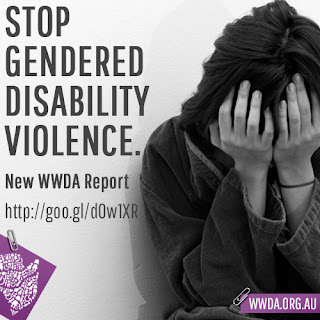
Is ‘Disability’ a feminist issue?

Image
Introduction Disability rights is a conversation often neglected within Australian policy, culture and academia. Just like intersections of gender and race, disability is another marginalised group which experiences varying forms of disadvantage. Similarly, disability is recognised as a social construct (Frohmader & Salthouse, 2004). [1] Globally, 1 in 7 people (1 billion) live with disabilities. Although people with disabilities have the same general health needs as people without disability, they are: [6] 2 times more likely to receive inadequate health care 3 times more likely to be denied health care 4 times more likely to be treated poorly in the health care system In Australia, 20% of the female population live with disabilities. Due to the intersecting categories of gender and disability (and any others e.g. race, class), women with disabilities are found to experience double-discrimination. This results in women with disabilities as experiencing higher levels of...