Posts

Showing posts with the label women's health

Feminism and Health: Our Bodies are not Testing Grounds
Image
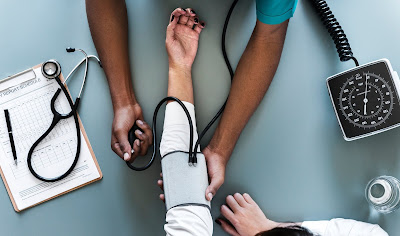
Women, transgender and non-binary people's relationships with the medical system have historically been fraught .  Many of them have left medical appointments feeling unheard, belittled, humiliated or like they are prone to hyperbole.  In order to change our collective relationship, interaction and engagement with the medical system to serve rather than hurt, it is important to understand why our relation to medicine has been problematic for us.  This piece will illustrate the ‘why’ through the lens of women’s experiences. However, transgender and nonbinary people face a multitude of additional healthcare issues. In order to do this topic justice, I will consider it more in-depth in a subsequent post. Image Description: Photo of a nurse taking someone's blood pressure. The photo is taken from above and set against a light blue background. Both of the nurse's arms are outstretched, while only one of the patients is. The nurse is holding the patient's el...


STEMinist – Without Me

Image
In 2009, I developed a tendency towards migraines. Since then, I have lived in four different countries with entirely different laws on medicine. Some drugs that are banned in one country aren’t in another and vice versa. For over ten years, I’ve searched for an effective replacement for my original migraine medication. During this time, a whisper of a question turned into a deafening demand: why is it so difficult to treat an ailment as common, yet incapacitating, as a migraine? The fact is, migraines affect one in five women. This statistic is disproportionate to the number of men who suffer from migraines (one in fifteen). Migraine research is rarely sex-specific, even though hormone levels affect migraine tendencies and can differ based on sex. The stigma around migraines - ridicule, doubt and disbelief by friends, family and colleagues – might be different if 20% of the male population suffered from these debilitating attacks. Yet migraines remain one of the most underfunde...

Why Chronic Illness is a Feminist Issue

Image
When people hear of conditions like Fibromyalgia, ME/CFS, Endometriosis and Lupus, they are often only vaguely aware of what they are and almost always ignorant of how they affect individual sufferers. There are so many different illnesses out there and no one person can know of all of them.   But the above mentioned are in fact quite common, and I bet you know of someone who has at least one of these syndromes/diseases. You might assume that, given their prevalence, a great deal of research and funding has gone into these illnesses, but the opposite is true . These conditions primarily affect women, and medicine was and still is a largely male-dominated field, from almost all-male animal studies to majority male human studies . The gatekeepers to the profession are also mostly men, meaning they are less likely to study illnesses that especially affect women. Indeed, non-life threatening illnesses dominated by female patients often lack funding and research and are poorly...

Transvaginal mesh implant scandal

Image
To understand what transvaginal mesh is, and why there’s a ‘scandal’ I have to explain what pelvic organ prolapse is, and how common it is for women. Pelvic organ prolapse (POP) occurs when a pelvic organ (bladder or rectum or uterus) shifts out of place. See this Guardian article for some helpfully explanatory diagrams: https://www.theguardian.com/society/2017/aug/31/vaginal-pelvic-mesh-explainer Pregnancy and childbirth is the leading cause for POP. Hormonal changes and the physical weight of carrying a baby can weaken the pelvic floor, and vaginal delivery can tear pelvic structures. In fact, POP affects up to half of mothers, but it can also be associated with heavy lifting, menopause or it can just be genetic. So POP is a common health issue for women, and as usual with women-centric health problems, a very quiet epidemic is happening.  Some women show no symptoms, and for some women the prolapse is debilitating. They can experience symptoms such as difficulty with bow...

What is Pre-Menstrual Dysphoric Disorder?

Image
What is Pre-Menstrual Dysphoric Disorder? (Trigger warning: Suicide section) What is PMDD? Pre-Menstrual Dysphoric Disorder (PMDD), is a hormonal mood disorder which causes disabling psychological and physical symptoms. It is a cyclic condition which onsets between the ovulation and menstrual period (1-2 weeks) before each period. It effects about 3-8% of menstruating women and is often self-diagnosed. It is found to disrupt women’s social, personal and work lives. There is no cure but there are treatment options.   [Image 1] History and Classification of PMDD PMDD was identified relatively recently (1994), and was only added to the Diagnostic and Statistical Manual of Mental Disorders in 2013, and to WHO’s International Classification of Disease index in 2010 [1]. The AIFC summarised PMDD from the 2007 UNS Health Care Newsroom as [2]: “Women who have PMDD were found to have variants in the oestrogen receptor alpha gene catechol-O-methyl transfera...